
ERP support and monitoring are critical to realizing the full value of an ERP investment, yet many organizations treat them as an afterthought once implementation is complete. Even modern ERP platforms can underperform when issues go unnoticed, integrations fail silently, or system performance degrades over time. The result is frustrated users, stalled processes, and ROI that never materializes.
The challenge isn’t the ERP system itself, it’s what happens after go-live. Without proactive ERP support and monitoring, organizations rely on reactive fixes, manual workarounds, and internal teams stretched beyond their capacity. This lack of oversight leads to downtime, data inaccuracies, security risks, and missed opportunities for optimization.
In this blog, we’ll explore why ERP support and monitoring are essential to protecting ERP ROI. You’ll learn how managed ERP services improve system performance, reduce operational risk, and ensure ERP platforms continuously support business goals. We’ll also examine how the right support model transforms ERP from a static system into a reliable, high-performing business asset.
Let’s begin!
Why ERP Systems Require Ongoing Maintenance
ERP support and monitoring are essential because ERP environments do not remain static after go-live. As systems evolve, performance, reliability, and usability can decline without active maintenance and oversight. Ongoing care ensures the ERP continues to support business operations effectively and securely.
Over time, ERP systems are impacted by frequent software updates and patches that require testing and optimization. Business processes change, new integrations are added, data volumes grow, and security threats evolve, increasing system complexity. Each of these factors introduces risk when not managed proactively, often leading to slow performance, data inconsistencies, or system downtime.
ERP complexity increases after go-live, not before. Continuous support and monitoring help organizations stay ahead of issues, adapt to change, and protect the long-term value of their ERP investment.
The Hidden Cost of Neglecting ERP Support
ERP systems sit at the core of daily business operations, making consistent support critical to performance and reliability. When ERP support is neglected, issues often surface gradually before turning into costly disruptions. These hidden costs can erode productivity, increase risk, and significantly reduce ERP ROI.
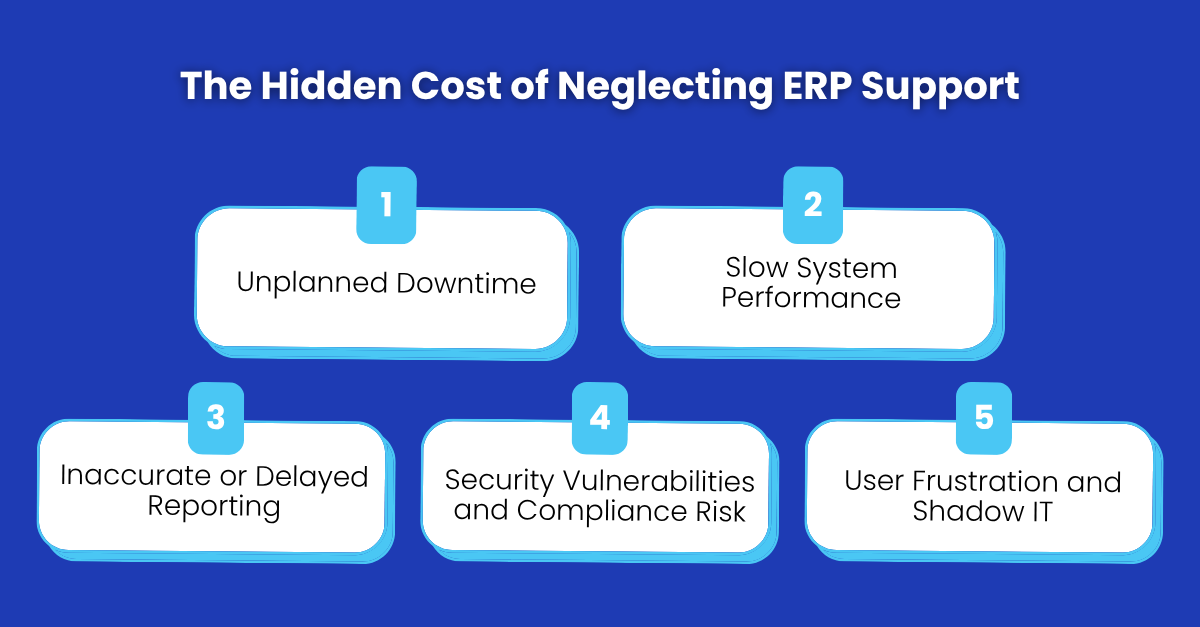
Unplanned Downtime
Without proactive monitoring, small system issues can escalate into unexpected outages. Unplanned downtime disrupts operations, delays transactions, and directly impacts revenue and customer satisfaction.
Slow System Performance
Performance degradation often goes unnoticed until users are affected. Slow response times reduce productivity and encourage workarounds that further strain the system.
Inaccurate or Delayed Reporting
Unsupported ERP environments increase the likelihood of data errors and reporting delays. Decision-makers lose confidence in system outputs, leading to slower or misinformed business decisions.
Security Vulnerabilities and Compliance Risk
Outdated patches and unmonitored access controls expose ERP systems to security threats. This increases the risk of data breaches, regulatory violations, and costly remediation efforts.
User Frustration and Shadow IT
When ERP systems fail to meet user needs, employees seek alternative tools outside approved systems. Shadow IT creates data silos, security gaps, and governance challenges.
The cost of neglecting ERP support often far exceeds the investment required for proactive care. Consistent ERP support protects system performance, reduces risk, and preserves long-term business value.
What ERP Support and Monitoring Really Involves
ERP support and monitoring extend far beyond resolving user tickets. Effective support focuses on maintaining system stability, performance, and security while preventing issues before they impact operations. Monitoring serves as an early warning system, identifying risks and performance degradation before disruptions occur.
System Health and Performance Monitoring
- Continuous monitoring tracks system availability, response times, and resource utilization.
- This visibility helps identify performance bottlenecks early and maintain a stable ERP environment.
Incident Management and Root Cause Analysis
- When issues arise, structured incident management ensures fast resolution.
- Root cause analysis prevents recurring problems by addressing underlying system or process failures.
Patching, Upgrades, and Version Management
- ERP platforms require regular updates to remain secure and supported.
- Proactive patching and version management reduce compatibility issues and protect system integrity.
Data Integrity and Job Monitoring
- Automated jobs and data flows must run reliably.
- Monitoring ensures data accuracy, detects failures early, and prevents reporting or transactional errors.
Security and Access Controls
- Ongoing support includes monitoring user access and system activity.
- This protects sensitive data while ensuring compliance with internal and external security requirements.
ERP support and monitoring protect system performance and business continuity. When done well, they prevent disruptions, reduce risk, and ensure ERP systems remain reliable long after go-live.
Benefits of Managed ERP Support Services
As ERP environments grow more complex, many organizations struggle to support them effectively with internal resources alone. Managed ERP support services provide a structured, proactive approach that reduces risk while improving system performance. This model allows organizations to focus on core business priorities without sacrificing ERP reliability.
- Predictable Support Costs: Managed services replace unpredictable break-fix expenses with consistent, planned costs. This makes budgeting easier while reducing the financial impact of unexpected ERP issues.
- Access to ERP Specialists: Managed ERP support provides access to experienced specialists without the overhead of full-time hiring. Organizations benefit from deep expertise across platforms, integrations, and upgrades.
- Faster Issue Resolution: Dedicated monitoring and established response processes enable quicker issue detection and resolution. This minimizes downtime and limits disruption to daily operations.
- Improved System Stability and Uptime: Proactive monitoring and maintenance reduce system failures and performance degradation. ERP systems remain stable, reliable, and available when users need them most.
- Scalability as Business Needs Change: Managed services scale easily as organizations grow, adopt new modules, or add integrations. Support adapts to evolving requirements without straining internal teams.
Managed ERP support services transform reactive IT work into proactive system optimization. This approach protects ERP performance, reduces operational risk, and strengthens long-term ROI.
Final Thoughts
ERP success isn’t defined by implementation alone, it’s sustained through ongoing ERP support and monitoring. Proactive care protects ERP investments, reduces operational risk, and ensures systems continue to deliver value as the business evolves. Without consistent support, even the best ERP platforms struggle to meet long-term performance and ROI expectations.
Organizations should evaluate whether their current ERP support model is proactive or purely reactive. Assessing system health, monitoring practices, and internal capacity is critical, because gaps in ongoing support often lead to downtime, user frustration, and hidden costs. Taking action now helps prevent small issues from becoming expensive disruptions.
To strengthen ERP performance after go-live, explore how Elevotec delivers managed ERP support and monitoring services. Request an ERP health check, review your support strategy, and learn how Elevotec helps organizations protect ERP ROI while freeing internal teams to focus on strategic initiatives.